


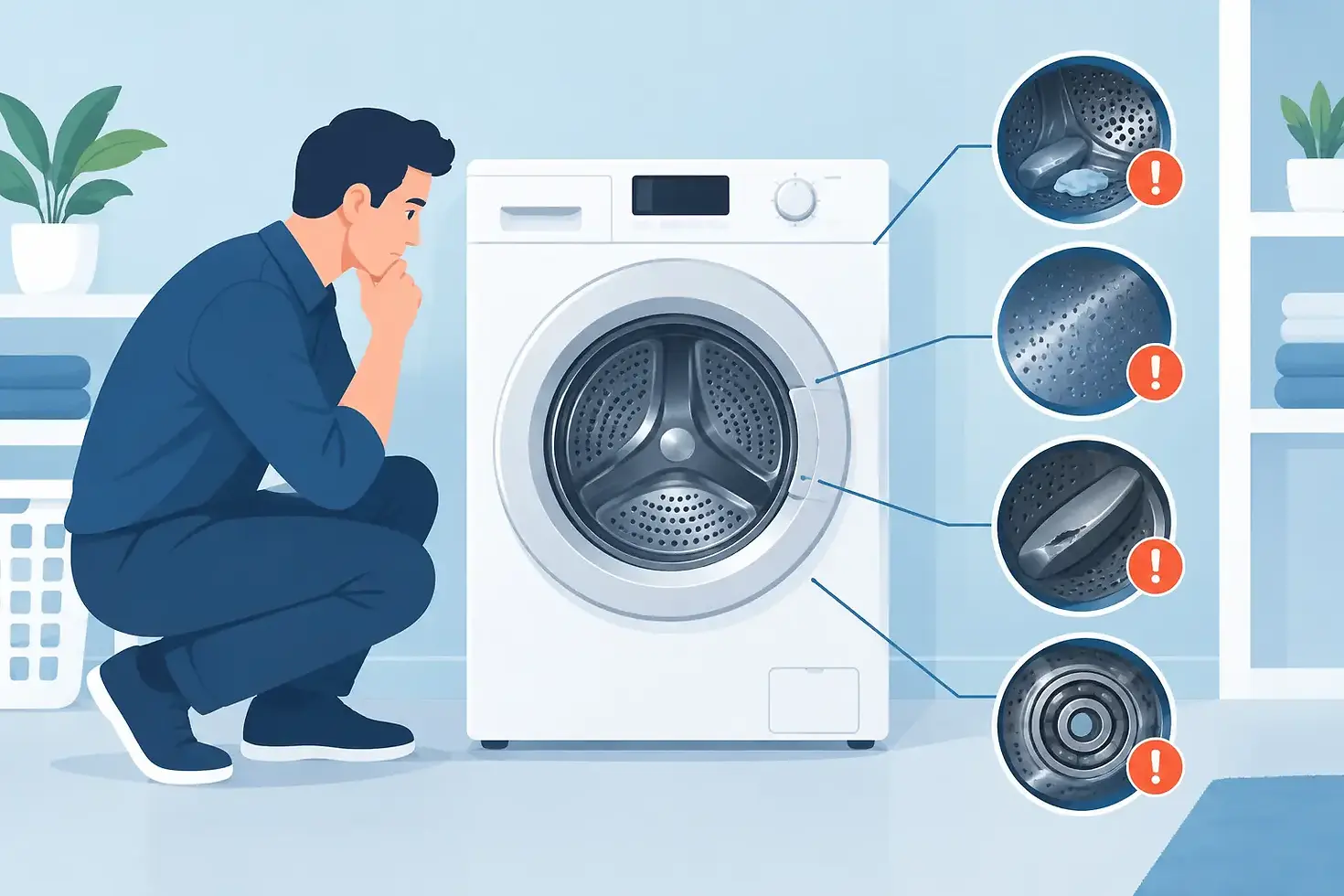
A Guide to Washer Drum Faults and Warning Signs
A washing machine drum should turn smoothly, sit firmly in place and make no more than the usual wash-day noise. When it starts knocking, scraping, dropping, wobbling or leaving marks on clothes, it is time to take notice. This guide to washer drum faults explains what those signs can mean, what you can safely check at home and when an experienced appliance engineer is the sensible next step.
A drum problem does not always mean the washing machine is beyond repair. In many cases, the fault is with a worn support part, loose fitting or an item trapped where it should not be. The right repair depends on the machine's age, make, condition and the cost of the parts involved.
The warning signs of washer drum faults
Drum faults tend to make themselves known during a wash or spin cycle. A machine that once ran quietly may suddenly sound like it has a bag of spanners inside. Other problems are less dramatic, but still worth dealing with before they become more expensive.
Look out for these common signs:
A rumbling, grinding or roaring noise that becomes louder on spin
A drum that feels loose, drops when lifted or moves side to side
Scraping sounds as the drum turns by hand
Excessive shaking or walking across the floor during spin
Rust marks, grey streaks or snagged fabric on washed clothes
Water leaking from underneath the machine
One noisy wash does not automatically mean serious damage. An uneven load, a heavy bath mat or a machine that is not level can make even a healthy washer shake. Repeated noise, movement or leaks are different. They need checking before a small fault damages the drum, outer tub, motor or floor beneath the machine.
A practical guide to washer drum faults
Coins, wires and other trapped objects
Small items can slip through pockets or bras and find their way between the inner drum and the outer tub. Coins, screws, hair grips, bra wires and bits of plastic are frequent culprits. You may hear a light metallic rattle at first, followed by scraping as the drum turns.
Switch the machine off at the mains before inspecting it. With the drum empty, turn it slowly by hand and listen carefully. Check the drum holes and rubber door seal for anything visible. Do not force a screwdriver or other tool through the holes, as this can damage the drum or seal.
Sometimes an object can be removed through the sump hose or heater opening, but this is usually a job for an engineer. Leaving it in place can score the drum, puncture the tub or damage the heating element.
Worn drum bearings
Bearings allow the drum to rotate smoothly. When they wear out, the machine often develops a deep rumble or roar, particularly during a fast spin. The sound is commonly mistaken for a noisy motor, but bearings are a very common cause on older washing machines.
With the machine unplugged and empty, open the door and lift the metal drum gently from the top. A small amount of movement can be normal, but obvious up-and-down play, a clunk or a feeling that the drum has dropped points towards worn bearings or a damaged drum support.
Bearing repairs can be economical on some models. On others, the bearings are sealed into a bonded outer tub, which can make the job far more labour-intensive and costly. This is where a clear estimate matters. A local engineer can assess the machine properly and explain whether repair makes sense compared with replacement.
Damaged drum spider or support arms
The drum spider is the metal support fixed to the back of the inner drum. Its arms connect the drum to the shaft and bearings. Over time, corrosion can weaken the spider, especially where hard water, detergent residue or a leaking seal has been present.
A broken or cracked spider can cause a loud knocking sound, a badly off-centre drum and damage to clothes. The drum may catch against the door seal or outer tub as it turns. This is not a fault to keep using. Continued spinning can break more parts and, in some cases, crack the outer tub.
Repair is possible on certain machines, but accessibility and parts cost vary considerably. The age of the washer is relevant too. A well-built machine with plenty of life left may be worth repairing, while an older machine with several separate faults may be better replaced.
Loose drum paddles
The plastic fins inside the drum are called paddles or lifters. They help move clothes through the water. If one comes loose, breaks or drops into the drum, it can cause thumping noises and may snag fabric.
This is often one of the more straightforward drum-related repairs. Do not continue washing sharp or loose pieces through the machine, as they can damage clothes or work their way behind the drum. Keep the detached part if you have it, as it can help identify the correct replacement.
Worn shock absorbers or suspension springs
Not every machine that bangs on spin has a faulty drum. The drum is held in position by suspension springs and shock absorbers. When these wear, the drum assembly can bounce heavily inside the cabinet, causing loud thuds and severe vibration.
First, make sure the washer stands level on a firm floor. Adjust the feet so it does not rock, and avoid overloading it with one bulky item. If the machine still jumps about with ordinary loads, worn suspension parts may be the cause. These parts are generally replaceable, but diagnosis is important because similar symptoms can also come from bearings, a damaged spider or transit bolts left in place after installation.
A damaged door seal or outer tub
If clothes are coming out with tears, black marks or greasy stains, inspect the door seal carefully. A worn or split seal can rub against the drum, trap small items and leak water. Sharp damage to the drum itself can also catch delicate fabrics.
Leaks beneath the machine deserve prompt attention. Water may be coming from a hose, pump, drawer or door seal rather than the drum assembly, but a failed bearing seal or cracked outer tub can also be responsible. Avoid running further wash cycles until the source is found, particularly if water is reaching electrical connections or flooring.
Safe checks before you book a repair
There are a few simple checks worth making, provided the machine is switched off at the mains. Empty the drum, check for loose objects, turn the drum slowly by hand and note whether the noise is a scrape, rattle or rumble. Check that the machine is level and that a heavy load has not become bunched on one side.
It also helps to note when the fault happens. A noise only during spin points in a different direction from a scrape that is present whenever the drum turns. If there is a leak, take a photograph of where the water appears, but do not remove panels or tip the machine over yourself. Washing machines are heavy, and internal components can hold water even after a cycle has finished.
Do not keep using a washer that has a loose drum, strong burning smell, repeated electrical tripping, significant leak or loud metal-on-metal grinding. Turning it off early can prevent a repairable fault becoming a replacement decision.
Repair or replace: making a fair decision
The best answer is not always the cheapest immediate option. A repair can be good value when the machine is otherwise reliable, the fault is contained and suitable parts are available. Replacing a paddle, suspension part, seal or trapped object is very different from replacing a bonded outer tub or a badly corroded drum spider.
Age matters, but it is not the only factor. A five-year-old machine with worn bearings may still be worth repairing if it is a solid model in good condition. An older washer with bearing noise, leaks and unreliable electronics may not be. A proper diagnosis gives you the information to choose without being pushed into a costly replacement.
At Derbyshire Appliances, you can speak directly to an experienced engineer, get a free estimate and decide what works for your household. There is no call-out charge, and where repair is not economical, replacement options can be discussed plainly.
A noisy or wobbly drum rarely fixes itself. Stop using the machine if the fault sounds severe, make a note of the symptoms and arrange an inspection before a simple repair turns into water damage, ruined laundry or a bigger bill.
Comments