


How to Stop Washing Machine Vibration Safely
A washing machine that walks across the kitchen floor, bangs against a cupboard or shakes the whole room is more than an annoyance. To stop washing machine vibration, start with the simple checks before assuming the appliance has failed. Many noisy machines are sitting unevenly, carrying an unbalanced load or standing on a floor that is less solid than it looks.
A little movement during a fast spin is normal, especially with larger loads. Heavy thumping, repeated banging, rattling or a machine that moves across the floor is not. Left alone, excessive vibration can damage the machine’s feet, hoses, cabinet and internal suspension. It can also put strain on your flooring and nearby units.
Why washing machines vibrate on spin
The spin cycle is where the problem shows itself. The drum rotates at high speed to force water from the laundry, and even a small imbalance becomes much more noticeable at those speeds. Modern machines will often pause and try to redistribute the load, but they cannot correct every issue.
The usual cause is not always a broken part. An appliance that was working well last week may start vibrating after being pulled out for cleaning, moved during decorating or loaded differently. Start with what has changed before looking for a major fault.
How to stop washing machine vibration at home
Check the load first
A single heavy item can make the drum badly unbalanced. Bath mats, towels, bedding, trainers and a duvet cover that has trapped smaller items are common culprits. The machine may knock loudly for part of the cycle, then settle, or it may stop spinning altogether.
Pause the programme if it is safe to do so, wait for the door to unlock and spread the items around the drum. If you are washing one bulky item, add a couple of similar-sized towels to help balance it. Do not pack the drum tightly either. An overfilled machine cannot tumble clothes properly, which makes an uneven spin more likely.
It is also worth checking pockets. Coins, screws, bra wires and loose objects can rattle around the drum or filter area and sound very much like a vibration fault.
Make sure the machine is level
All four feet need to sit firmly on the floor. If one foot is not taking the weight, the machine can rock from corner to corner and become very noisy during spin. Place a hand on each top corner in turn. If it rocks, it needs adjusting.
Use a spirit level across the top of the appliance from side to side and front to back. Turn the adjustable feet gradually until the machine is level and stable. Most feet screw in or out by hand, although a spanner may be needed if they are tight. Once adjusted, tighten the locking nuts against the underside of the machine so the feet cannot work loose over time.
Do not rely on pushing cardboard, timber or folded cloth under a foot. It may quieten the machine briefly but will compress or move, leaving the appliance unstable again. Proper adjustment is the safer fix.
Look at the floor beneath it
A solid concrete or tiled floor is usually ideal, but even those surfaces can be uneven. Timber floors can flex, particularly in older properties or upstairs utility areas. A machine may be perfectly level when empty but still shake when the drum reaches full spin speed because the floor moves with it.
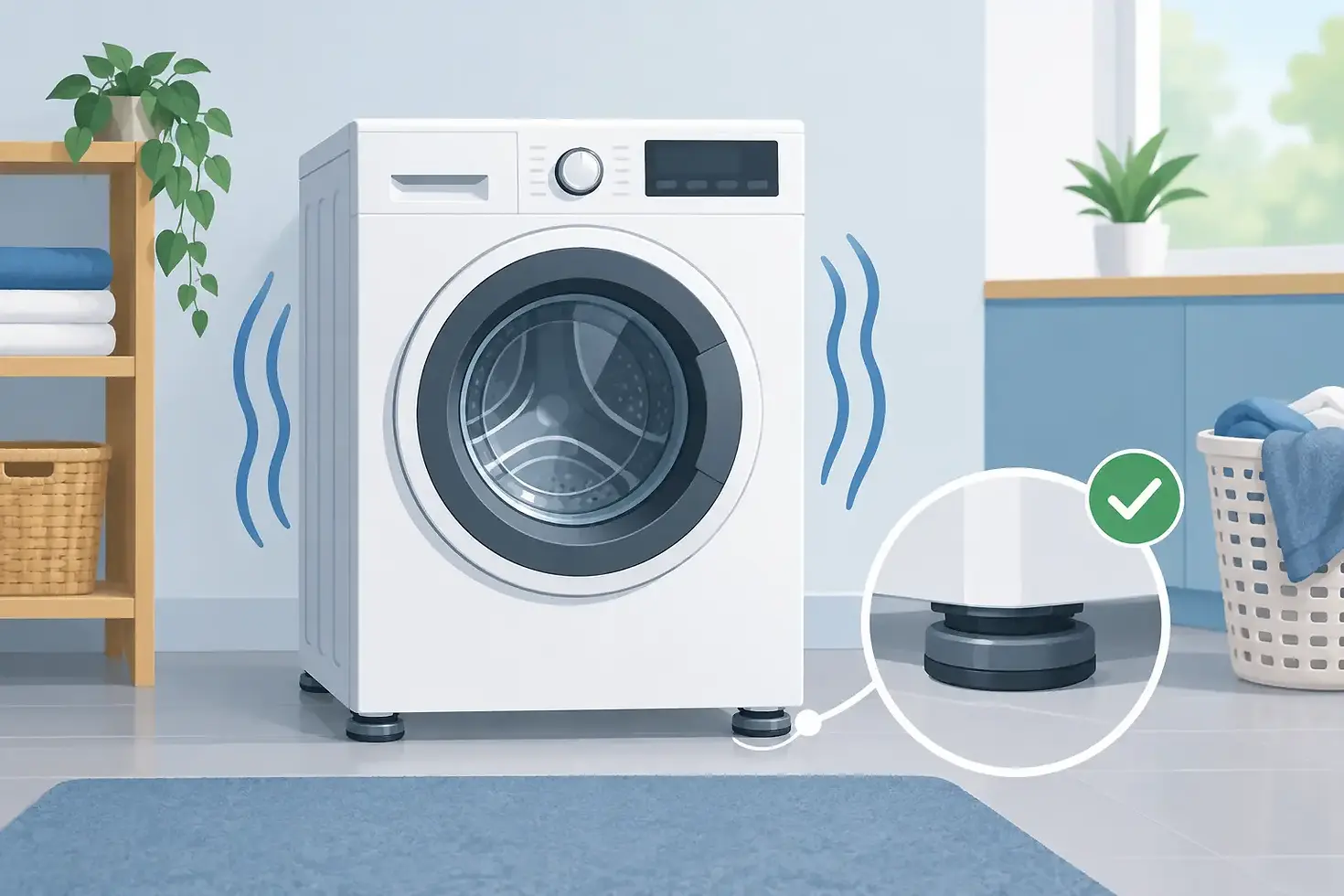
Anti-vibration pads can reduce noise transferred into a hard floor and help prevent minor slipping. They are useful where the machine is already level and the vibration is modest. They will not cure worn suspension, a damaged bearing or a seriously uneven floor, so avoid using pads as a way of hiding a fault.
If the machine sits under a worktop, check that it is not pressed tightly against the side units or wall. A small gap around it stops normal movement turning into a loud knock against cabinets or pipework.
Check it was installed without transit bolts
This matters most with a newly delivered or recently relocated machine. Washing machines are supplied with transit bolts at the back to lock the drum in place during transport. They must be removed before use.
A machine run with transit bolts still fitted can shake violently and may suffer internal damage. Check the instruction booklet for the bolt locations or inspect the rear panel. The bolts are usually large and obvious, often with plastic spacers. If you are unsure whether they have been removed, do not keep running spin cycles until it has been checked.
Keep hoses and cables clear
At the back of the appliance, make sure the drain hose, inlet hose and power cable are not trapped or repeatedly hitting the wall. A loose hose can create a sharp knocking sound that seems to come from the machine itself. The drain hose should be secure but not pulled tight, and it should not be kinked.
When vibration points to a fault
If the appliance is level, the load is sensible and the floor is sound, the issue may be inside the machine. The parts that control drum movement wear over time, especially in busy family households where the washer runs several times a week.
Worn shock absorbers or suspension springs allow the drum to bounce too freely. This often causes hard banging on spin, even with a normal mixed load. A damaged concrete balance weight can create a heavy knocking sound and should be checked promptly, as loose fixings can cause further damage.
Drum bearings are another possible cause. These often produce a rumbling, grinding or aircraft-like noise that becomes louder as the spin speeds up. With the machine switched off and empty, try lifting the inner drum gently from the door opening. Noticeable up-and-down movement, roughness when turning the drum by hand or brown staining beneath the machine can all suggest bearing trouble.
A loose drum paddle, foreign object between the drums or a failing motor can also create unusual noise. The key point is that a machine should not be dismantled just to investigate a knock unless you know exactly what you are doing. There are heavy components, sharp edges and electrical parts involved.
A quick check before booking a repair
Before arranging a visit, run through these practical checks:
Empty the drum and check it turns smoothly by hand.
Test whether the machine rocks when you press each top corner.
Inspect the floor and all four adjustable feet.
Run a small, balanced wash rather than bedding or a single heavy item.
Listen for grinding, metal-on-metal noise or repeated loud banging.
Check underneath and behind the appliance for leaks, loose hoses or signs of rubbing.
If the vibration only happens with one type of load, it is usually a loading or balancing issue. If it happens on every spin cycle, gets worse over time or comes with a leak, burning smell, grinding noise or error code, stop using the machine until it has been assessed.
Repair or replacement?
A vibrating washing machine does not automatically need replacing. Feet adjustment, a worn shock absorber, a loose weight or a hose issue may be economical to put right. The decision depends on the appliance’s age, make, overall condition and the cost of the required parts.
A direct diagnosis is far more useful than guessing. Derbyshire Appliances can assess the cause, explain the likely repair clearly and provide a free estimate with no call out charge. Where a repair is not sensible, there is also the option of a replacement machine rather than being left without a workable plan.
Do not keep turning the spin speed down just to live with severe vibration. Lower speeds may reduce the noise, but they do not deal with an unstable machine or a worn internal part. A washing machine that stands firm and spins smoothly protects both the appliance and the home around it.
Comments