


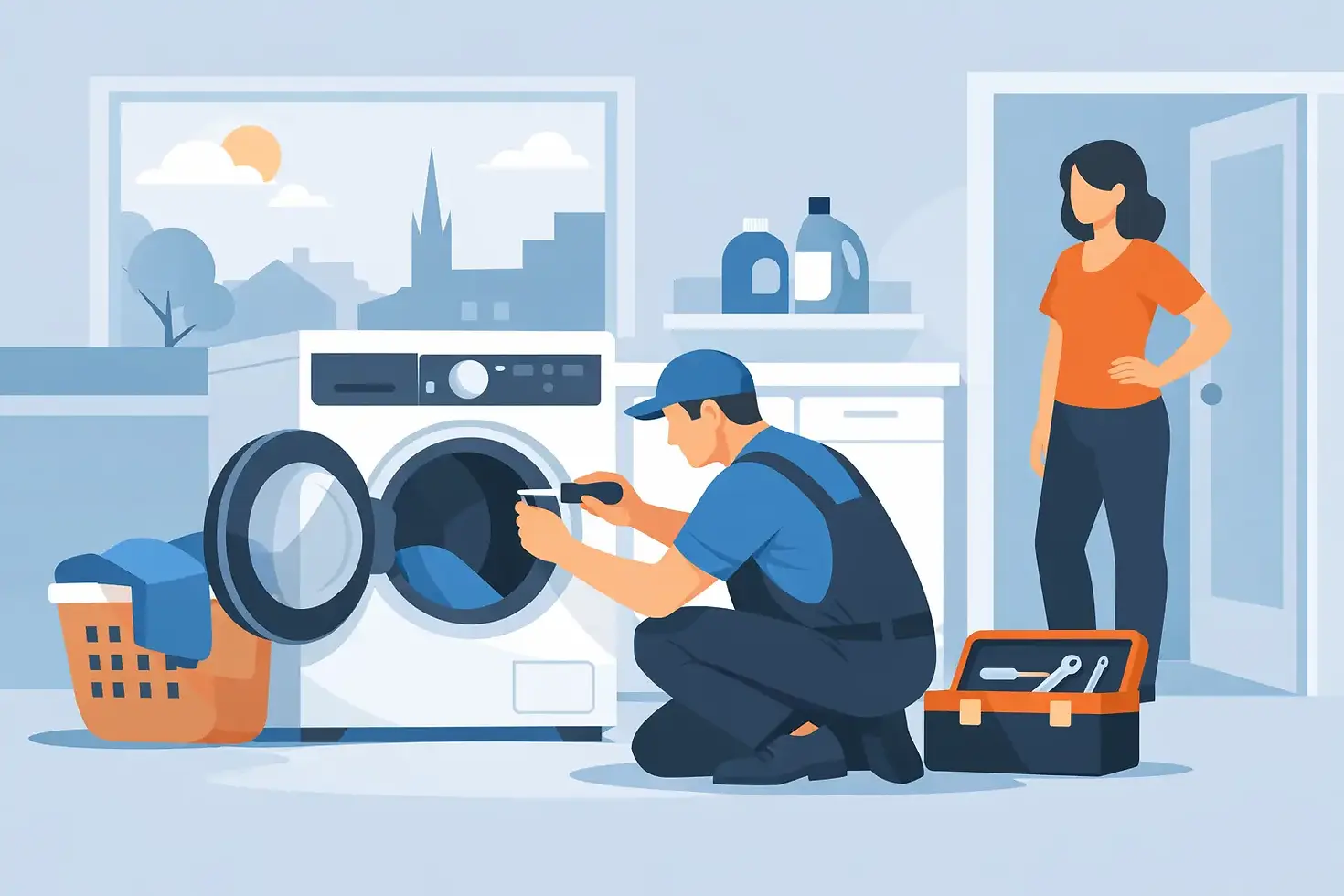
Same Day Washer Engineer in Derby - What to Expect
A washing machine rarely breaks down at a convenient time. It is usually halfway through the family wash, with school uniforms needed for tomorrow or a pile of towels waiting to be dealt with. When that happens, a same day washer engineer can make a real difference - but it helps to know what a quick repair visit should involve and what you can do before the engineer arrives.
At Derbyshire Appliances, the aim is simple: get to the fault quickly, explain the sensible options clearly and, wherever possible, get the machine working on the first visit. There is no call out charge and no need to work through a national call centre. You speak directly to an experienced local engineer.
When you may need a same day washer engineer
Some washing machine faults can wait a day or two. Others cannot. A machine that has stopped spinning may leave a load soaking wet, while one that will not drain can leave water trapped in the drum. A leak can quickly damage flooring, cupboards or the ceiling below if the machine is in an upstairs flat.
Same-day help is particularly useful when your washer is showing one of these problems:
It will not start, has stopped mid-cycle or keeps tripping the electrics.
The drum fills but will not turn, spin or drain.
Water is leaking from the door, drawer, hoses or underneath the machine.
The machine is making loud banging, grinding or scraping noises.
The door remains locked with washing inside, or an error code keeps returning.
Not every fault needs an emergency response, and a same-day visit will depend on availability, location and the nature of the problem. Still, calling early gives you the best chance of being seen that day, including evenings and weekends where possible.
A few safe checks before calling
A quick check can sometimes save an unnecessary visit, but do not take panels off or try to force the door open. Washing machines contain electrical components and can hold water even when they appear to have stopped.
First, make sure the machine is switched on at the socket and that the consumer unit has not tripped. Check that the water tap feeding the machine is fully open and that the door is firmly closed. If the washer will not drain, look for a visibly kinked drain hose behind the machine. If it is safe to do so, switch the appliance off at the mains and turn off the water supply if there is an active leak.
It also helps to note the make and model, the error code if one is displayed, and exactly when the fault happens. For example, does it fill with water but stop before spinning? Does the noise only start on a fast spin? These details help an engineer narrow down the likely cause and bring the right common parts where possible.
What happens during a same-day washer repair visit?
A proper repair starts with diagnosis, not guesswork. The engineer will ask what the machine has been doing, inspect the obvious causes and test the relevant parts. Depending on the fault, this may include checking the drain pump and filter, inlet valves, door lock, motor brushes, belt, heating element, pressure system or electronic controls.
Many everyday faults are straightforward. A blocked pump, worn belt, faulty door interlock or failed heater can often be identified and repaired without delay. More involved faults, such as a damaged drum bearing, a cracked outer tub or a failed control board, may need a part ordered or may make replacement the better value choice.
You should receive a clear explanation before repair work goes ahead. A free estimate means you can decide whether the repair is worthwhile without being committed by a call out fee. That matters with an older machine, where spending money on one fault may not be sensible if another major component is close to failing.
Repair or replace? The honest answer depends
Most people would rather repair a washing machine than replace it after every problem. A good repair can extend its working life, avoid the cost of a new appliance and keep an otherwise sound machine out of disposal. If the fault is a pump, lock, hose, belt, heater or similar serviceable part, repair is often the economical route.
Age, condition and the cost of the repair all matter. A relatively young, good-quality machine with a single fault is normally well worth fixing. An older machine with noisy bearings, a leaking drum tub or repeated electronic faults is less clear-cut. The cheapest repair today is not always the best value over the next few months.
This is where an independent local engineer is useful. The advice should be based on the appliance in front of them, not on a target to sell a new machine. If replacement makes better sense, you can consider a brand new washing machine or a reconditioned option rather than being left without a practical next step.
Why direct access to the engineer matters
When the washing machine has failed, the last thing you need is to repeat the same details to several people before anyone can tell you when help is available. Speaking directly to the engineer means the fault can be discussed properly from the start. It also makes it easier to arrange a time that fits around work, children and the rest of the household.
A local engineer knows that a broken washer is not a minor inconvenience for a busy home. Fast attendance is valuable, but so is arriving prepared. More than 25 years of hands-on experience across mainstream brands helps with diagnosis and with carrying the parts most commonly needed for first-visit repairs.
There are limits, of course. No engineer can carry every part for every model, particularly for unusual machines or specialist electronic components. If a part has to be sourced, you should be told plainly what is needed, what it will cost and when the repair can be completed.
Getting the most from your repair appointment
Make the area around the washing machine accessible if you can. Moving laundry baskets, cleaning products and other items out of the way gives the engineer room to pull the appliance forward safely and inspect the hoses and connections. If the machine is integrated behind a cupboard door, mention this when booking, as access can take longer.
Do not run another wash if the machine has leaked, made a burning smell or tripped the electrics. Leave it switched off and explain what happened. If there is water on the floor, dry what you safely can and keep children and pets away from the area.
Have the model details ready if possible. They are often found around the door opening, on the rear panel or in the instruction booklet. A photograph of an error code can also be useful, especially if it disappears when the machine is switched off.
Same-day help without the pressure
A failed washer can make the day feel harder than it should, but it does not automatically mean you need a new appliance. A prompt inspection and a straight answer give you the information needed to act sensibly - whether that means a simple repair, ordering a part or choosing a replacement that suits your household.
If your machine has stopped, leaked or left you with a drum full of wet washing, call as early as you can. A local same-day washer engineer can assess the fault, provide a free estimate and help get the washing routine back on track without unnecessary fuss.
Comments