


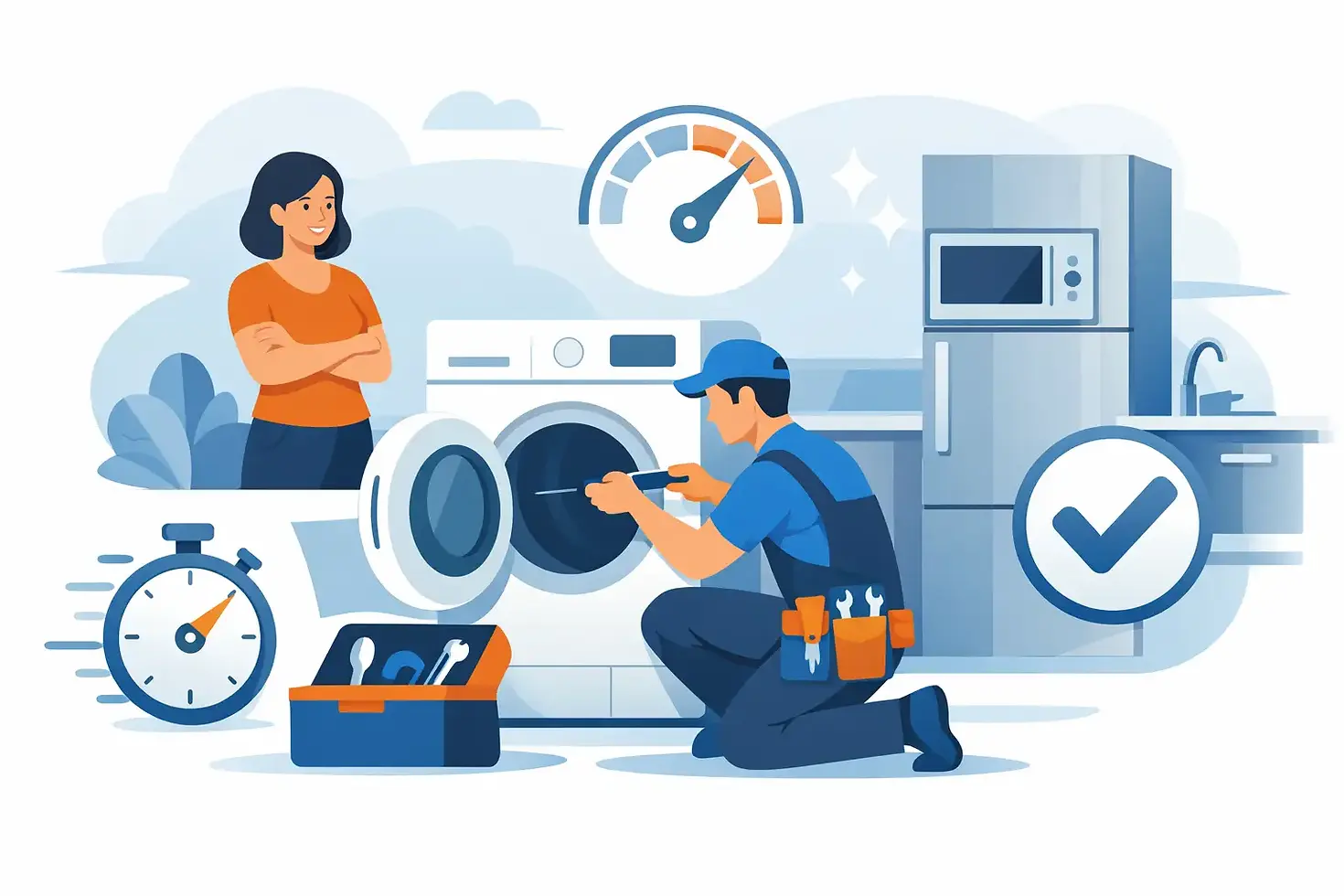
How a First Visit Appliance Fix Saves Time
A washing machine that will not drain on the morning of a school run, an oven that will not heat before dinner, or a dishwasher leaving everything dirty can quickly throw the household off course. A first visit appliance fix is about getting the fault diagnosed properly, carrying the right common parts and giving you a clear answer without dragging the job out over several appointments.
For most people, the priority is simple: get the appliance working again at a fair price. That means speaking to someone who understands the fault, not repeating the same details to a call centre and waiting days for a response. A local engineer can ask the right questions before arriving, assess the appliance in your home and explain the sensible options plainly.
What a first visit appliance fix really means
A first-visit repair does not mean making promises that cannot be kept. Some appliances need a less common part, and an older model may need a part that has to be ordered in. What it should mean is that the engineer arrives prepared to deal with the faults seen most often, rather than starting every job from scratch.
Common problems such as failed pumps, blocked filters, worn door catches, faulty heating elements, broken belts, damaged hoses and thermostat faults can often be identified and repaired there and then. Good diagnosis matters as much as having parts in the van. Fitting a part without confirming the cause may get an appliance running briefly, but it is not a proper repair.
With more than 25 years of hands-on experience, an engineer will usually recognise the signs quickly. The sound a washing machine makes when it tries to drain, the way an oven trips the electrics, or the pattern of lights on a dishwasher can all point towards the likely cause before the appliance is even opened.
Why the right information helps first-visit repairs
The best chance of a quick repair starts before the appointment. When you call, it helps to have the make and model number to hand. This is normally found on a label around the door opening, on the side or back of the appliance, or inside the filter flap on some washing machines and dryers.
It is also useful to describe exactly what has happened. “It is not working” is a starting point, but details make a difference. Does the washing machine fill with water but fail to spin? Is the dryer turning but staying cold? Has the oven stopped heating altogether, or is one function still working? Is there a fault code on the display?
Photographs of error messages can help too. The clearer the picture of the problem, the better the chance of arriving with the likely replacement part or knowing what to check first. It also means less time spent on guesswork when you need your appliance back in use.
Faults that can often be fixed on the first visit
Every make and model is different, but many domestic appliance faults follow familiar patterns. Washing machines commonly suffer from drainage issues, worn carbon brushes on older motors, damaged door locks, pressure faults and heating problems. A machine that will not spin may simply be unable to drain, rather than needing a new motor.
Tumble dryers often stop heating because of a failed heater, thermostat or thermal cut-out. If the drum is not turning, a belt, tensioner or motor fault may be responsible. With condenser and heat-pump models, blocked filters and poor airflow can also cause poor drying performance or error messages. Cleaning the filters regularly can prevent some of these problems, but it will not cure a failed component.
Dishwashers can leak, fail to fill, leave water in the base or finish a cycle with dirty dishes. The cause could be a blocked filter, a pump issue, a split hose, a heating fault or a worn door seal. An engineer needs to test the machine properly, as a leak can travel and appear somewhere other than its true source.
Electric ovens have their own set of common faults. A fan oven that comes on but does not heat may need a new element. A cooker that trips the consumer unit can have an element breaking down internally. Temperature problems may come from the thermostat, sensor or control system. These repairs need to be carried out safely, with the appliance isolated and tested before it is put back into service.
Repair or replacement: the honest answer depends
A quick repair is often the most economical choice, especially when the appliance is otherwise in good condition. Replacing a pump, heating element, belt or door lock can give a reliable machine several more years of use. It also avoids the cost and inconvenience of buying, delivering and installing a replacement before you need one.
There are times when replacement makes better sense. If an appliance has repeated faults, major damage, severe corrosion or an expensive electronic failure, spending more money on repairs may not be wise. Age matters, but it is not the only factor. A well-built older appliance with a straightforward fault can be a better repair prospect than a newer machine with a costly sealed component or unavailable parts.
The useful thing is to have the choice explained clearly. Derbyshire Appliances can advise on economical repairs as well as replacement options, including brand-new washing machines and reconditioned appliances. You should know the likely cost before committing, not be pushed towards the most expensive outcome.
How to prepare for a first visit appliance fix
A little preparation can make the appointment safer and faster. If possible, clear items away from around the appliance and make sure there is reasonable access to the plug socket, water connections or filter area. Do not pull a heavy integrated dishwasher or oven out yourself if you are unsure how it is fitted.
If there is a leak, switch the appliance off and turn off the water supply if you can do so safely. If an oven has tripped the electrics, leave it switched off rather than repeatedly resetting the consumer unit. For a washing machine full of water, avoid opening the filter until you have been advised, as water can spill out quickly.
Keep any error code visible and mention whether the appliance has recently been moved, installed, overloaded or affected by a power cut. These details may seem small, but they can narrow down the diagnosis.
Direct to an engineer means fewer delays
When an essential appliance stops working, people do not want a complicated booking process or vague answers. Speaking directly to an experienced engineer makes it easier to explain the problem, arrange a suitable time and get practical advice before the visit.
Flexible appointments can matter just as much as the repair itself. Same-day, evening and weekend availability can reduce the disruption, particularly for households managing work, children or caring responsibilities. A no call-out charge and free estimate also take some of the uncertainty out of arranging a repair.
Local service is not about making grand claims. It is about turning up prepared, diagnosing the fault honestly and treating your home with respect. If the repair can be completed on the first visit, that is the ideal result. If a part is needed, you should still leave the appointment knowing what has failed, what it will cost and whether repair is worthwhile.
The next time a household appliance lets you down, note the model number, the symptoms and any error code before you call. A few clear details can be the difference between another day without it and a repair that gets normal life moving again.
Comments